You Need To Stop Saying “Email Marketing Is Dead”

John R Ramos • May 26, 2020
This era of technological advancement has been accused of “killing” a lot of things.  Some say that Airbnb is killing the hotel business, others will tell you that ride-sharing threatens the taxi-cab industry, and millennials have caused the death of all sorts of things.

Email Marketing is dead…or is it?

The “death toll” of digital marketing channels continues to grow—but we can’t always believe the dramatic claims we hear.  After all, people have been saying SEO has been dead for years.  This argument is weak at best, especially when you consider Google, a company fueled by search traffic, has been on an upward trajectory for the last two decades.

Still, the tech obituary continues to announce new victims.  One recent claim you may have heard: Email marketing is dead.  It’s no wonder professionals feel this way, this year’s pandemic does bring up some challenges.  Tech companies—and their tactics—are falling under speculation and numerous marketers have been clinging to the idea that email marketing is obsolete.

Today, regardless of what’s going on, we’re going to pivot away from this idea.  Our current world situation is actually making us more creative with “old fashion” tools.  That’s right, one of them is Email Marketing.
No, it isn’t dead but it is changing.  Email Marketing is evolving, and as marketers, we have to evolve with it.

Why do people think email marketing is dead?

If we go back in time you will find that it all started with data.

Advertisers, marketers, and researchers have long been collecting data to learn about users. This knowledge is often used as a way of improving the customer experience.

We’ve all been subject to unappealing or irrelevant advertisements. And in today’s market, we need communication that actually appeal to us—of itself, it will speak volumes for the way “new” data collection is done.

Still, it would be silly to argue data collection is purely for the customer. At the end of the day, all businesses, small, medium or large, need to make money. If we like the ads we see and/or the education pieces we see about certain products or services, that’s great for us. If we use them to purchase items, that’s even better for businesses.


Data got powerful

As the years have passed, we’ve seen just how far data collection can go. Data can be used to categorize traits, manipulate users, and potentially influence elections.

It’s data’s endless possibilities that have weighed heavily on the EU since the 90s, inspiring the 1995 Data Protection Directive, and most recently, GDPR. (It’s worth noting that the beginnings of the GDPR movement began the same year Facebook was compromised.)

You may be asking what is GDPR

>>> The General Data Protection Regulation (GDPR) is a legal framework that sets guidelines for the collection and processing of personal information from individuals who live in the European Union (EU) <<< (I can cover this topic in greater detail in another blog if you, my dear reader, want me to)

Growing A Organic Email List


Not sure if Constant Contact is for you? There is no such thing as a free lunch, but there is a FREE evaluation of this platform – Click here… https://conta.cc/2IZyiPG

When it comes to growing a subscriber list organically and preventing churn, email marketers want users who are interested in marketing messages and personalized offers.

Users unsure about their subscription status, why they’re receiving emails, or how they got on the list—these are not typically indicative of quality subscribers or a well-executed email list.

In fact, if users feel that they can trust you and your brand, they will give you their information. Most consumers are willing to trade personal information for trustworthy benefits and valuable products.

Perhaps this is why email marketing is still more valuable than almost any other form of marketing—its success is largely based on trust and building relationships with clients.

Email marketing is doing better than ever 
before as an industry

Email continues to be one of the worthiest investments a businesses can make. In fact, 65% of marketers cite it as the top ROI-generating marketing method for their organizations. Perhaps this is why 50% percent of marketers sought to increase their spending on email marketing this year.

Email marketing is not just a boon for businesses, however. Email marketing is also a growing career opportunity. Did you know that as of 2017, email marketing jobs were trending, making email marketing a worthy investment and a profession in high demand.

You can still reach more people through email

Email is still a far more consistent way of getting in front of customers, especially if you set the correct expectations for your users.


People are willing to sign up for your subscriber list if they feel the content is relevant to their experience. Whether your newsletter offers promos, news, weekly recipes, or giveaways, setting up the correct expectations will attract users to subscribe to your list. By adding value to your content and your signup CTA (Call-to-action), you can increase conversions by 16.9%.


Unlike ads, users have full control of their inbox, meaning they’re more likely to show interest in your email than they would in your banner ad or social media post.

And since 92% of online adults use email, email virtually guarantees eyes, whereas social media puts you at the mercy of the time of day, algorithms, and consistent user engagement.


More people use email than social media

Marketers may claim email marketing is dead, but more people continue to use email over social media. And here is why…You do not have any control on your Social Media followers, if you have a list of emails that you correspond with on a regular bases, you own that list. The algorithm for any of the Social Media platforms is always changing so needless to say, is unpredictable as to whom may get to see your messages. Studies have shown that only about 2 to 3% of those that follow you on any of Social Media platforms, will ever get to see what you are publishing. In fact, only ~74% of internet users use social media, whereas 89.6% of internet users send an email at least once per month.

And even though many people still use social media, not everyone is utilizing the same platform. Instead of focusing your personalization tactics to specific platforms, you could be segmenting your emails based on user data. Since 51% of marketers consider email segmentation to be the most effective personalization tactic, focusing on social media alone may be a lost opportunity.

Plus, segmented email marketing campaigns boast 14.64% more email opens and nearly 60% more clicks. Customization helps users prepare, which makes the email more relevant and valuable.

Most people expect and appreciate 
email marketing efforts

We may traditionally consider advertisements to be a nuisance, but 32% of consumers want to receive promotional emails more than once a week.

Of the numerous people who subscribe to newsletters, 74% want a welcome email when they subscribe to a list. Even something as familiar as a birthday email can drive open rates and conversions.

In short, users may have more control when it comes to their information, but many consumers appreciate marketing efforts and even expect them.

Email Marketing is a constant

We’ve watched the fluctuation of technology trends, and in some cases, we’ve seen certain trends “die.” We’ve seen social media go from a niche interest to a global marketing platform.


Similarly, we’ve watched email addresses die out, and we’ve seen approaches to email marketing evolve. But through all of these changes, one piece of technology has remained a constant: Email. People still browse their inboxes for updates, subscribe to lists for news, and send emails to keep records.


Email still delivers a huge ROI, too—$38 for every single dollar spent. This is much stronger than most forms of marketing, and it shows the constant and relevant nature of email marketing.


Wrapping up

People may have more power over their information, but that doesn’t mean email marketing has lost its appeal. If anything, we as business people, see great potential to improve the lives of our subscribers. By listening to users, we can easily evolve with email marketing.

And as always, I hope that if you find this article of value, that you would share it on your social media platforms. 

Please let me know if there is anything that I can be of assistance with your marketing. You are certainly welcomed to reach out to us if you want to have a free ½ hour consultation.

If you have a topic you'd like us to cover, email us at john@thejrsolutions.com. We would be very happy to try to accommodate your request.

The JR Solutions Blog

By John R Ramos • November 6, 2026
A few years ago, I spent money on software that promised to help me write better marketing copies. I wanted to develop my copywriting skills professionally. The offer sounded practical: use this software to organize my thoughts and put together a more effective message. I bought it. I followed the instructions. I gave it a try. The content attracted little readership, and I didn’t see enough value to justify what I had spent. Looking at the finished work, I felt I could have written something comparable myself. Then the next offer arrived. This version would help me create more targeted messages, with better hooks and more persuasive words. A few days later, another offer followed. The upgrades were optional. But each message gave me another reason to question whether what I had already purchased was enough.
By John R Ramos • October 19, 2026
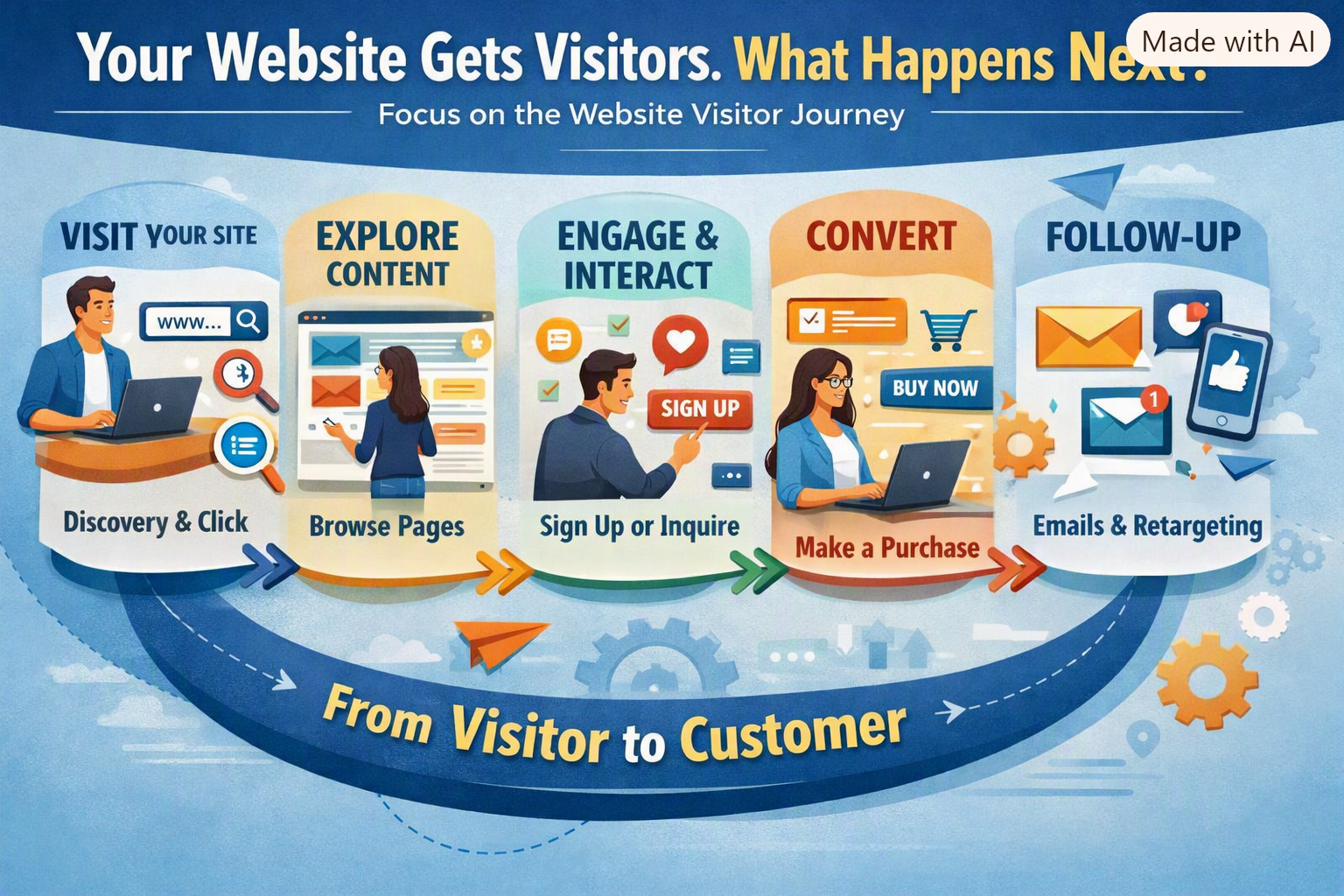
When I visit a prospect’s website, I’m trying to understand the business before we talk. What do they offer? Who do they serve? What would make someone choose them? Sometimes, the website leaves me with more questions than answers. I can find the business name and a few general statements, but I have to hunt for the information that would help me take the next step. As a business owner, you already know your services. You understand your process. You know what makes your work worth paying for. Someone visiting for the first time needs help seeing those things. Look at your website through a customer’s eyes Let’s use a hypothetical neighborhood gym. A person living nearby wants to start exercising again. They haven’t belonged to a gym in years, and they’re a little uncomfortable about walking into one. They find the gym’s website. There are photos of equipment and people lifting heavy weights. The headline says, “Reach Your Full Potential.” That sounds encouraging, but they still have questions. Are beginners welcome? Does someone explain how to use the equipment? Are there classes that fit around a work schedule? Can they visit before joining? If the website leaves those questions unanswered, making contact becomes another task they might put off. Give people something they can use For our hypothetical gym, a current class schedule would help. So would an introduction to the trainers and a short explanation of what happens during a first visit. Photos of the actual facility could help someone picture themselves there. Clear information about membership options could help them decide whether to inquire. Think about the questions people ask when they call your business. Those conversations can tell you what belongs on your website. You don’t have to answer everything. Give visitors enough information to feel comfortable continuing the conversation. Make the next step clear Suppose the gym’s main invitation is “Subscribe to our newsletter.” You know I believe in newsletters. Email marketing has been a large part of my work for 14 years. But someone considering a gym membership may first want to see the facility or speak with a trainer. “Schedule a tour” gives that person a useful next step. Explain what happens, too. How long does the tour take? Will someone answer questions about membership? Does the visitor need to bring anything? A clear invitation becomes more helpful when people know what to expect. Give interested visitors a reason to stay connected Some people will visit the gym’s website before they’re ready to join. Perhaps they’re comparing options or waiting for their schedule to settle down. Email can help maintain that connection, with their permission. Instead of simply asking them to subscribe, explain what they’ll receive. For this gym, that could mean beginner workout advice, class updates, and introductions to the trainers. Then deliver what you promised. Useful, consistent emails give people opportunities to get to know the business before making a decision. Decide what deserves attention first You may be reading this and wondering whether your website needs a complete redesign. That takes a closer look. An older design or a single-page format alone doesn’t tell us enough. Start with the information and actions your customers need. Check whether those are easy to find and use, especially on a phone. If your budget is limited, ask for a proposal that explains priorities. What can be improved within the existing site? What requires more work? What is each change intended to accomplish? You should understand what you’re paying for. Try this today: open your website and imagine you’re considering your business for the first time. Find a service. Look for answers to a few basic questions. Try to make an inquiry. Where do you hesitate? That’s a useful place to begin. At The JR Solutions, I’m preparing to add website development through a collaboration with another agency, alongside my content writing and email marketing services. If your website no longer reflects the business, you run today, let’s talk about what needs attention. Contact me at john@thejrsolutions.com
I Don't Really Have a Content Strategy. I Have a Habit of Being Honest.
By John R Ramos • September 23, 2026
Part 3 of 3: how three articles about my own business became one lesson. Part 1 was about a process I thought I knew by heart. Part 2 was about a process I forgot I ever built. This one is different. This one is about the process behind this very series: how I decide what to write about each week. The honest answer is that there isn't one method. Some weeks I plan ahead. I pick a topic on Monday and have it written by Wednesday. Other weeks the topic finds me. Something breaks, something surprises me, or something forces me to look closely at my own business, and that becomes the article. A few of these pieces came from weeks that were harder than they looked from the outside. Part 2 came out of a stretch where client work had slowed and I needed a reason to sit down and actually examine my own systems instead of avoiding them. Writing about a missing automation was easier than saying out loud that business had gotten quiet. Putting it on the page made it real, and making it real made it easier to face.
By John R Ramos • September 2, 2026
A 14-year email marketing consultant admits he doesn't have an automation sequence running — and explains why that's the right call for now. Part 2 of 3.
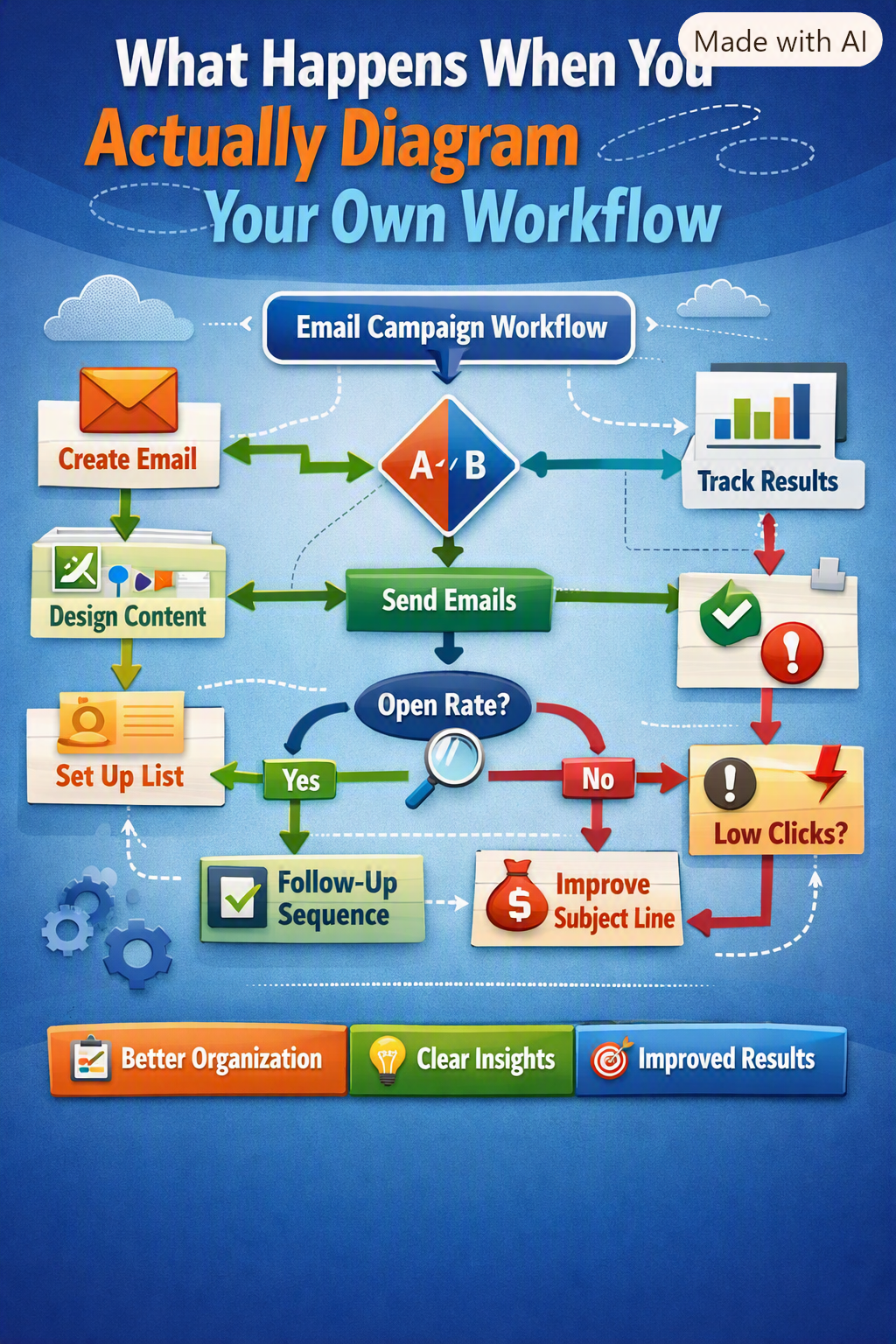
Flowchart of a nine-step email campaign-building process
By John R Ramos • August 17, 2026
A 14-year email marketing consultant flowcharted his own campaign-building process — and found a real gap in it. Part 1 of a 3-part series.
By John R Ramos • July 29, 2026
A 14-year email marketing consultant ran a real 30-day test letting AI write client emails. Here's what worked, what broke, and what to actually do.
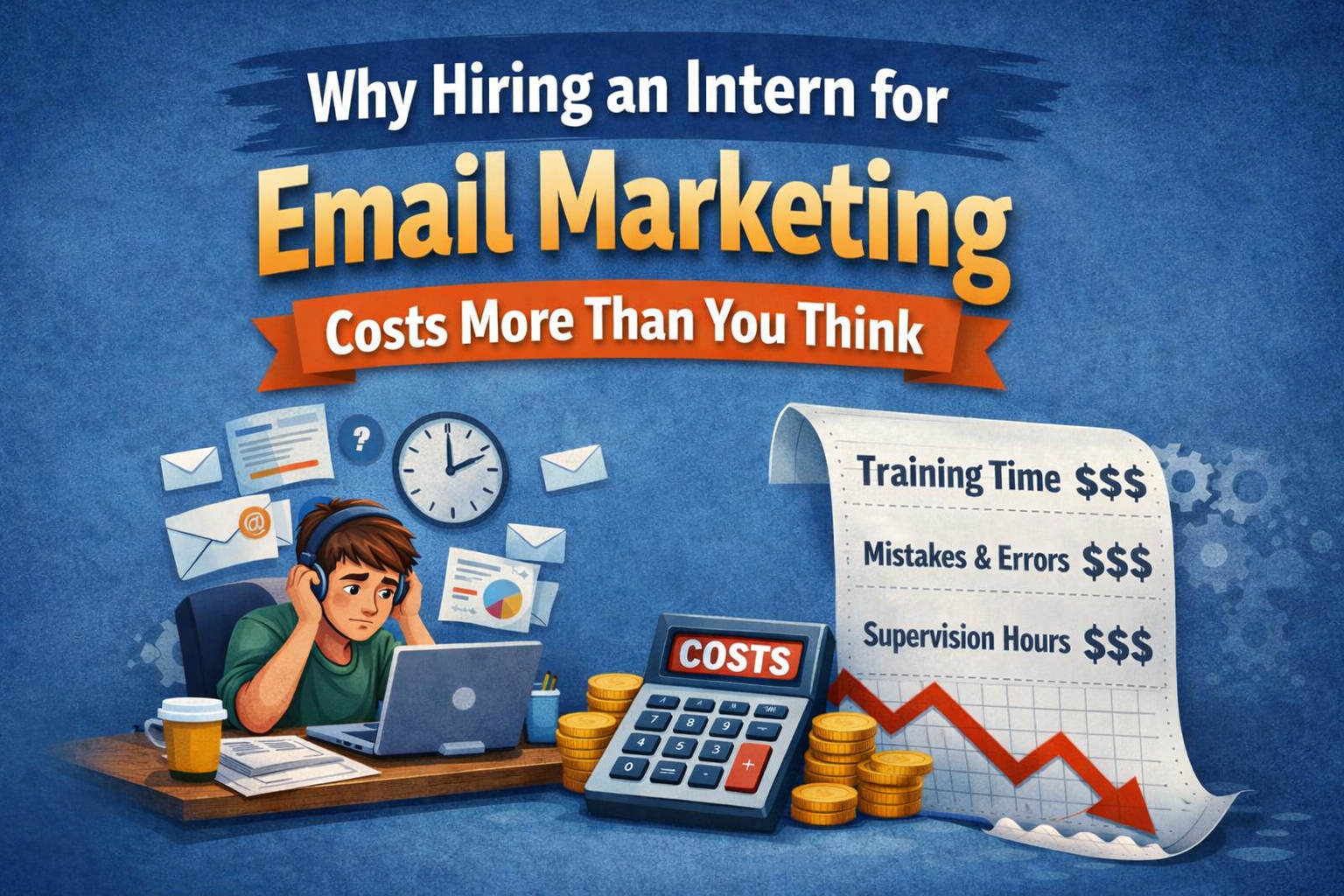
Why Hiring an Intern for Email Marketing Costs More Than You Think
By John R Ramos • June 30, 2026
Thinking about hiring an intern to handle your email marketing? Here's the hidden cost most small business owners don't see until it's too late — from a 14-year Constant Contact partner.
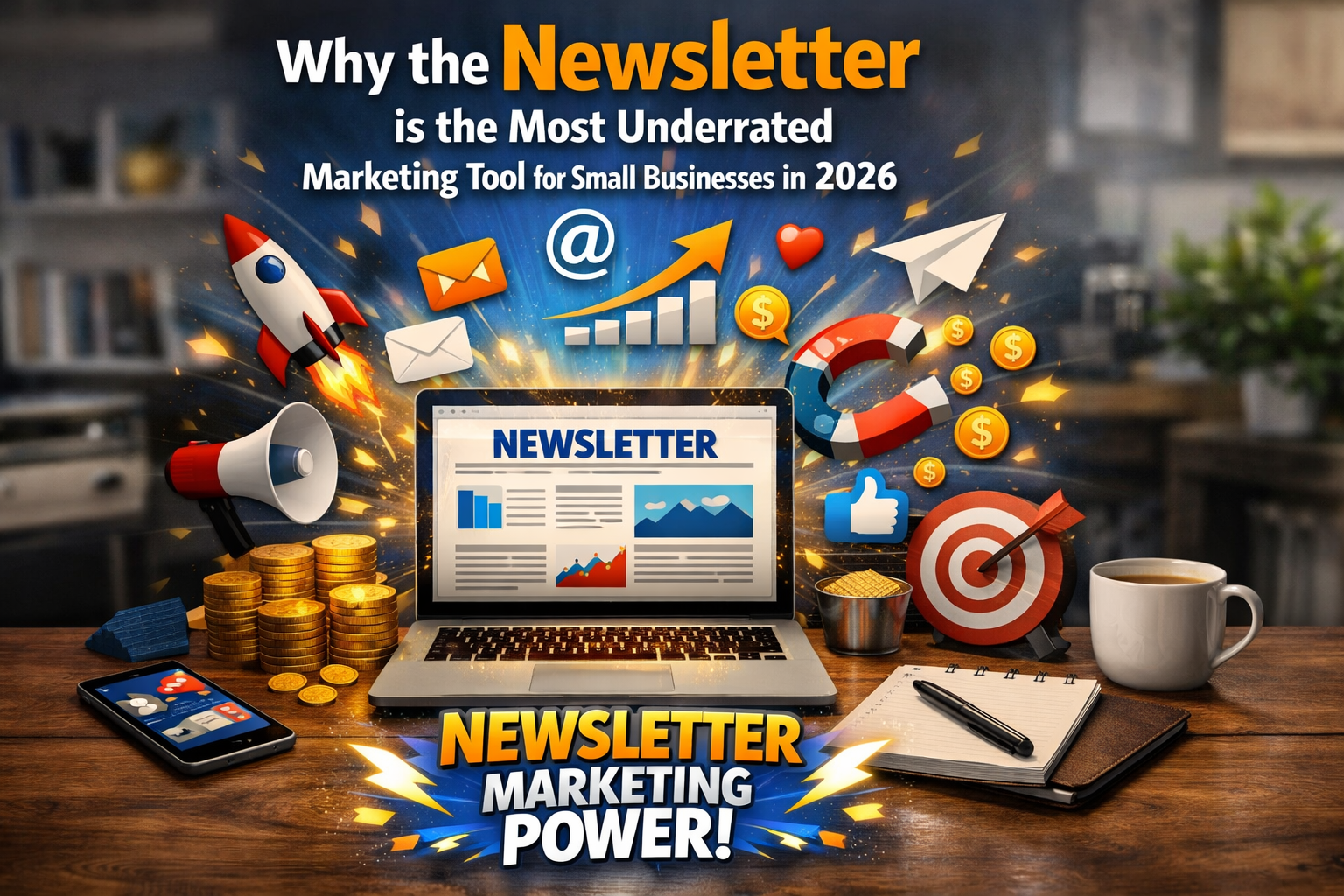
Why the Newsletter is the Most Underrated Marketing Tool a Small Business Has in 2026
By John R Ramos • June 12, 2026
Thinking about hiring an intern to handle your email marketing? Here's the hidden cost most small business owners don't see until it's too late — from a 14-year Constant Contact partner.
Small business owner reviewing email deliverability metrics on a laptop in Orlando, Florida,
By John R Ramos • June 9, 2026
Gmail and Outlook quietly changed the rules in late 2025. Here's why your small business marketing emails may not be arriving — and what to do.
By John R Ramos • June 8, 2026
You are sitting at your desk, looking at the monthly numbers, and the thought crosses your mind: maybe email marketing would help the business. Then you look at the budget again and shake your head. “I can't afford it right now.” I have heard those exact words from more small business owners than I can count. And after nearly 14 years working with small businesses across Orlando and Central Florida, I want to share something that might change how you think about that sentence. Almost every time someone tells me they can't afford email marketing, money is not the real reason. That is not a sales line. It is something I have watched play out over and over. The math, when you look at it honestly, almost always says they can afford it. What is actually going on underneath the surface is usually something completely different. And until we name that, the conversation about email marketing for small businesses never goes anywhere useful. So let us look at it together honestly.