Why Hiring an Intern for Email Marketing Costs More Than You Think
I had a phone call this week with a small business owner here in Central Florida. He was wrestling with a question many of you have probably asked yourselves:
Why hire an outside expert to handle email marketing when I could just bring on a college intern part-time? Or honestly — why not just tackle it myself on a Sunday night?
It's a completely logical question. An email tool looks like a text box and a send button. Whoever taps the keys ends up sending the message. So why pay an outside expert at all?
I want to answer that question honestly — not as a sales pitch, but because the truth reveals something most small business owners don't see until it's already cost them.
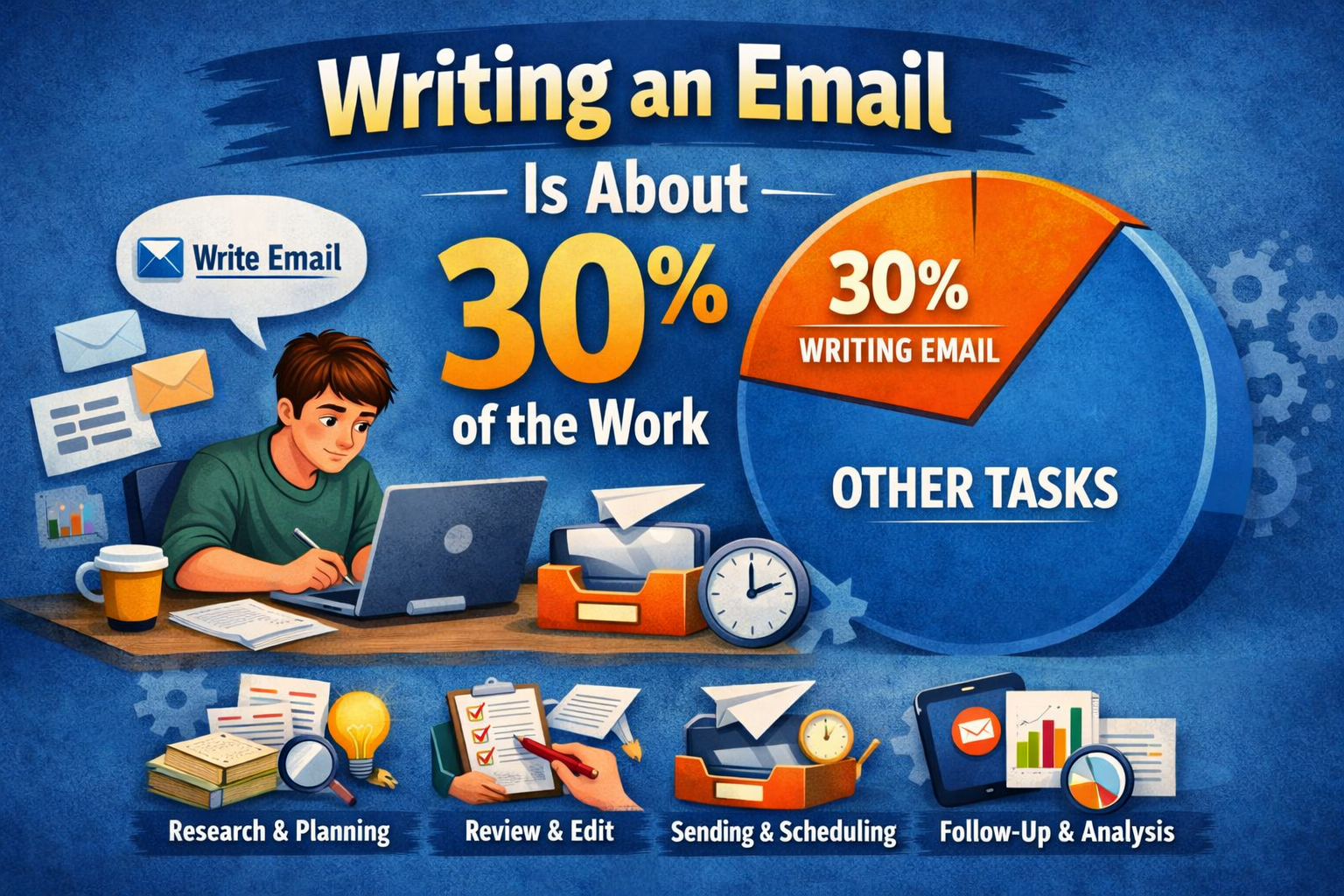
Writing an Email Is About 30% of the Work
Here is the part that takes most people by surprise.
Writing the email is roughly thirty percent of what email marketing actually is. The other seventy percent is the work that determines whether the email actually performs, and that work is invisible to anyone who has not done it before.
That hidden seventy percent looks like this:
- List hygiene — knowing how to clean and maintain your subscriber list so deliverability stays strong
- Deliverability strategy — understanding why some emails land in inboxes and others land in spam folders, and being able to diagnose which is happening to you
- Segmentation — dividing your audience into meaningful groups so the right people get the right message, instead of one generic blast
- Dynamic content rules — setting up the platform to deliver personalized versions of the same campaign to different segments automatically
- Performance analysis — reading the data after each send and knowing what the numbers actually mean, not just looking at open rates
- Cadence and timing strategy — figuring out the right rhythm and time of day for your specific audience
- Compliance and legal hygiene — staying on the right side of CAN-SPAM, GDPR, and the platform's own rules
- Subject line and preheader optimization — the specific craft of earning the open in 2026, not the tactics that worked in 2018
An intern can usually handle the thirty percent. They can write a clean email. They can hit the send button. What they almost never know how to do — because nobody has taught them yet — is the seventy percent that makes the difference between a campaign that produces results and one that produces a flat open rate and a slowly shrinking list.
You are not paying an experienced email marketer for the thirty percent. You are paying for the seventy percent.
The Intern Experiment
There is a particular pattern I have seen small businesses fall into so many times that I have started calling it the Intern Experiment.
It works like this. A small business owner decides email marketing is important. They do not want to pay an outside expert, so they hire a college student or recent graduate on a part-time basis. The intern is enthusiastic, energetic, and comfortable with technology. The hourly cost looks reasonable.
But here is what nobody mentions about the intern route:
You are not just paying the intern's hourly rate. You are also paying with your own time — the time to train them, manage them, edit their work, review their drafts, fix their mistakes, and keep them on track. For the first three months, the intern is essentially a part-time job for you. You are not getting marketing help. You are training a marketer.
And then comes the real kicker.
Six months later, that intern moves on. They graduate, take a full-time job somewhere else, or simply find a better-paying gig. And when they leave, they take all the training and institutional knowledge right out the door.
You are not back to square one. You are worse than square one. Because now you have a half-built system and an incomplete process, you have to start the training cycle over with the next intern. And the next one. And the next one.
The Intern Experiment looks cheap on paper. In practice, it is one of the most expensive ways a small business can handle marketing.
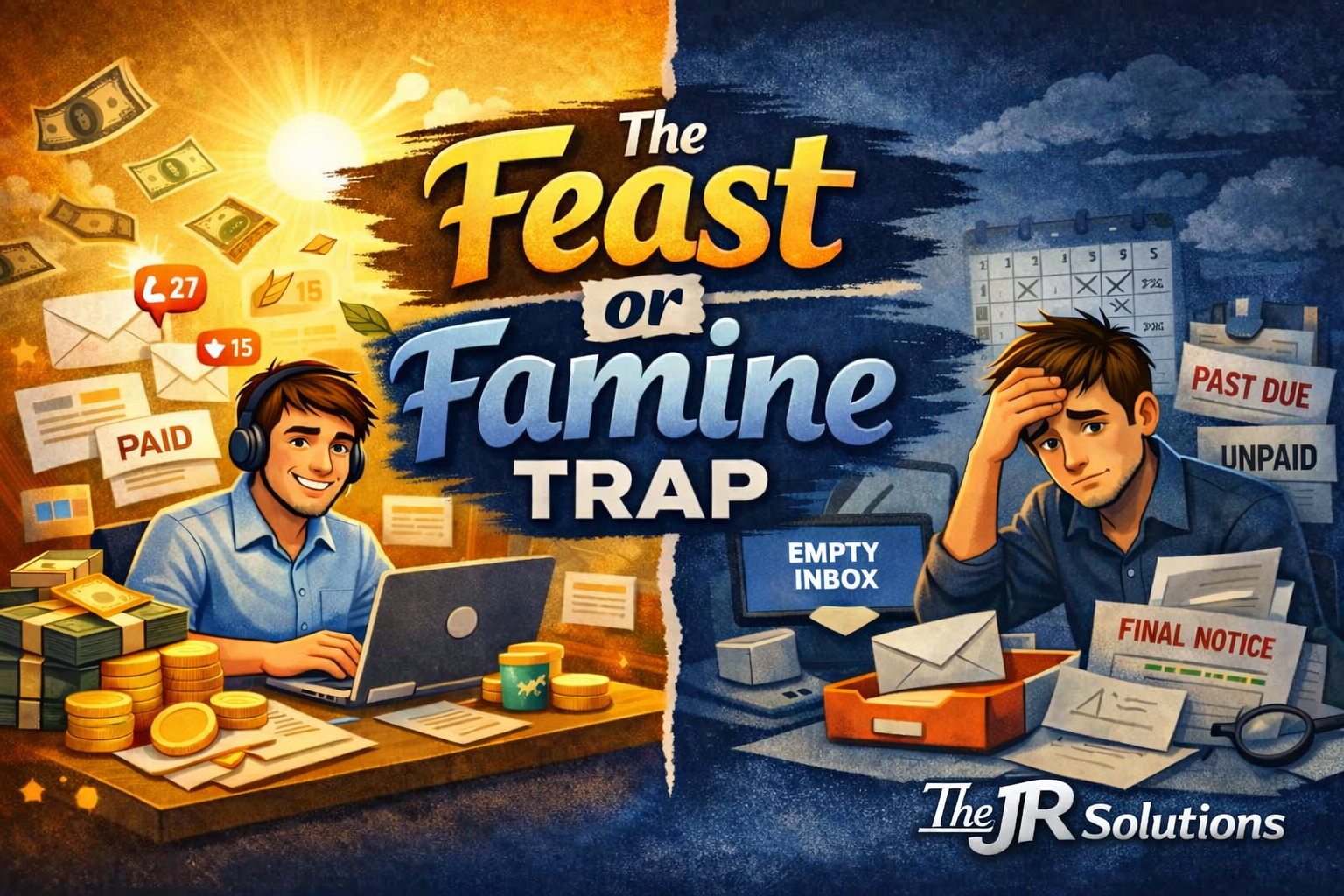
The Feast or Famine Trap
The other path small business owners often take is to handle email marketing themselves. This is the Sunday night version of the same problem.
Here is the pattern I see constantly:
When business is booming, marketing is the first thing dropped. You are too busy fulfilling orders, serving clients, and running the business to sit down on Sunday night and write a newsletter. So, you skip a week. Then two. Then a month.
Then business slows down — and suddenly you panic. You scramble to send three emails in one week, trying to drum up business. The tone shifts from helpful to desperate. Your audience can feel it.
This is the feast-or-famine cycle. And it does more damage than most business owners realize.
Your audience learns the pattern. They notice that you only show up when you need something. They start ignoring you. Open rates drop. Unsubscribes climb. Your most valuable marketing asset — a real, engaged email list — quietly erodes underneath you while you are too busy to notice.
The hidden cost of doing it yourself is not the time spent writing emails. It is the trust your audience loses every time you disappear and reappear. That trust is hard to win and easy to lose, and once it goes, it is genuinely difficult to rebuild.
What an Experienced Outside Partner Actually Does
Now, contrast those two patterns with what happens when you bring in an experienced outside partner.
An outside partner provides an uninterrupted, steady drumbeat of content. Marketing runs in the background — every week, every month, every quarter — whether you are swamped with clients or taking a well-deserved vacation.
The system does not depend on your Sunday night energy. It does not require you to train someone new every six months. It does not break down when you get busy.
It also benefits from something an intern cannot offer at any price: real experience.
When you partner with someone who has spent more than a decade doing this work, you are bringing in:
- Pattern recognition from hundreds of campaigns across dozens of industries
- The instinct to spot deliverability problems before they become deliverability disasters
- The judgment to know when a tactic that is trending will actually work for your audience and when it will backfire
- The discipline to keep showing up on the schedule you committed to, even when you would rather not
- The strategic perspective to connect your email program to your larger business goals — not just sending emails for the sake of sending emails
None of these comes from a textbook. They come from years of doing the work, watching what compounds, and learning from campaigns that did not work as well as those that did.

What You Are Really Buying
Here is the honest reframe most small business owners need to hear.
Hiring an experienced email marketing partner is not about finding someone to type emails. It is about freeing up your time to focus on the high-level growth work only you can do.
You are the only person who can have strategic conversations with your biggest clients. You are the only person who can make the decisions about where the business is headed next year. You are the only person who can build the relationships that lead to your largest opportunities.
Every hour you spend wrestling with email templates, segmentation rules, deliverability questions, and content calendars is an hour you are not spending on those higher-leverage activities. That is the real cost of doing it yourself. Not the hours. The opportunity cost of those hours.
Smart business owners eventually realize the same thing: the goal is not to do every task in your business. The goal is to do the tasks only you can do and let experienced professionals handle the rest.
Email marketing is one of those rest-of-it tasks. Done well by someone who actually knows the craft, it becomes a permanent, compounding asset that drives your business forward without requiring your daily attention.
A Harder Truth
I want to be honest about one more thing, because honesty is how I write.
Marketing is an investment. It is not a line item to be cut when budgets get tight. It is the engine that keeps the pipeline full, ensuring future budgets stay healthy.
The small businesses that thrive over the long run are the ones that understand this. They keep their marketing running in good times and in lean times. They treat it as essential infrastructure, not as a discretionary expense.
The small businesses that struggle are usually the ones that treat marketing as the first thing to cut when revenue dips. They save a few thousand dollars in the short run. They lose far more in the long run because their pipeline runs dry just when they need it most.
This is not a sales pitch. It is just what fourteen years of watching small businesses succeed and fail has taught me. The businesses that see marketing as an investment build durable companies. The ones who see it as an expense usually do not.
If You Are Trying to Figure Out the Right Path
If you are currently weighing the intern route, the do-it-yourself route, or the experienced partner route, here is the honest framework I would offer:
Choose the intern route if: you have genuinely unlimited time to train, supervise, and re-hire every six to nine months — and you are willing to accept that the work will be inconsistent and that institutional knowledge will keep walking out the door.
Choose the do-it-yourself route if: you have the discipline to write your newsletter every two weeks for the next twelve months without skipping a single issue, regardless of how busy your business gets. Most small business owners cannot honestly answer yes to this. The ones who can are rare and impressive.
Choose the experienced partner route if: you want a marketing engine that runs reliably in the background, builds a real owned asset over time, and frees you to focus on the parts of your business that only you can drive forward.
All three are valid choices. The right one depends on what you are actually trying to build.

Two Honest Paths Forward
If you would rather handle this yourself — I genuinely wish you well. I have written a free guide called The Honest Newsletter Guide for Small Business that walks through exactly how to build a real newsletter program from scratch. Drop me a line at john@thejrsolutions.com, and I will send it your way, no strings attached.
If you would rather have an experienced partner handle it for you — we should talk. Not a sales pitch. Just a real twenty-minute conversation about what you are trying to build and whether what we do is actually the right fit for your situation. Sometimes it is. Sometimes it is not. Either way, you walk away with clearer thinking about your next step.
You can reach me directly:
Email: john@thejrsolutions.com
Phone: 407-617-2910
Website: www.thejrsolutions.com
The JR Solutions Blog