Why You May Need A Content Writer

John R Ramos • August 5, 2021

Let's Talk For A Minute About Content Writing  

If you are taking the time to read this blog then dream with me for a minute.

.

Imagine us getting together before going into an event for talks, presentations, and meet-and-greets, we agree to meet up at that quaint little coffee shop on the corner nearer our hotels.

.

We sit at a table by a window looking out onto a sunny city street.  Bright-eyed, early shoppers passing on by with their shopping bags, and business people in suits and blazers hurry by on their way to their first morning meetings.

.

We sip our coffees and chat idly about the upcoming events of the day and after my last sip of Cuban coffee from the tiny little cup, all wired up, I ask, “So, how is your company’s blog doing?”

.

You reply with a pained sigh, and lifelessly mutter: “It could be doing so much better.”

.

I, then, very attentive, listen closely to what you have to say, you continue on letting me know of the issues you perceive having with it.

.

You go on to tell me that you can’t keep up with the weekly consistent blogging schedule

 that it takes to maintain proper consistency online.

.

You’re hyper-focused on quantity and obsessed with pushing out content just to get it out there.   Ergo much of your content is just okay, while most of it is downright rushed and bad.


You haven’t even thought about SEO.

.

Writing isn’t your forte, nor is it the specialty of anyone else on your team, so you struggle mightily when it comes time to create content.

.

Your main competitor, on the other hand, has an incredible blog and is jumping ahead of you by leaps and bounds with the audience they’re drawing in.  And the list goes on.

.

You sit back in your chair, rubbing your temples.   Just thinking about the situation gives you a headache.

.

You know what I’m going to say.  I say it anyway.

“You need a content writer” …that’s right, “a content writer”!

.

I can share with you 5 basic reasons why you need invest in a Content Writer.

.

By the way, before you ask, [if you do ask], there is a difference between Content Marketing [Writing} and Blogging.

Now I know, I know, this is just a tale, but even though this is an imaginary situation, the point still stands.  If you’re like most small brands, some or all of this is ringing true.

.

Research shows most small business owners, marketers, and communications professionals experience a disconnect between knowing what successful writing looks like and achieving it.

.

76% say they know what successful writing looks like, but only 45% think their content is extremely ineffective.

.

Nearly half of all business communicators struggle to understand what their audience wants to read.

.

Those with only moderate success with content writing struggle with most aspects of the process: writing and publishing consistently, maintaining quality over time, writing headlines, writing for SEO, writing concisely, getting the words to flow, and meeting deadlines.   As you can see, you’re not alone in your struggles.

.

But there IS a solution.

.

You need a content writer, and I’m here to tell you why. [Imagine going back to that make-believe conversation we had over high-octane coffee]

You Don’t Have Time

Woman on laptop writing

I talk to business owners all the time and even marketing specialists who respond to my question about their web content the same way you did.

.

Sometimes, I just want to reach through the phone, shake them, and ask “Why do you think you’re not doing better?!  It’s because you don’t have time!”

.

"I want to, but I don’t do, it’" is your response.  At any rate, the reason you can’t keep up with a busy writing schedule is simple:   You don’t have time.   You’re too busy running your business.

.

Thankfully, the solution is pretty simple, too. Hire a content writer.

.

Not only do we have the time to develop your content for you (because this is our job and what we spend our days doing), but we do this all the time, so we can make it happen more quickly than you can.

.

You don’t have the workflow down.   We do.

Content Writing Is More Than Writing

When you hire a content writer [hopefully me... :-) ], you’re not getting someone who will write generic content that may or may not apply to your business. You’re hiring a team member who will take an interest in your business and will be eager to learn how you work, who your audience is, and where your big successes and failures are now.

.

Once we have all the information we need, we’re going to be doing more than writing – we’re going to be communicating with your audience on a level you’d never have time to maintain.

.

Not only that, but our team is very experienced with writing for SEO — including keyword and topic research — as well as editing, writing for social media and other content formats, and more.

.

Content writing means we have to be good at a little of everything – and that’s good for you.

A Good Content Writer Brings a New Perspective

A common mistake of CEOs and business owners doing their marketing and advertising is that they’re just too close to their products.  They can’t see the forest for the trees, so to speak.

.

Your content writer, on the other hand, is coming to the table with no biases and a fresh perspective.   They’ll look at your product with zero prior knowledge of its existence, in many cases.

.

A content writer who’s worth his or her salt will take an interest in your business and will work tirelessly to understand it while maintaining their clear-eyed objectivity.  It’s this objective stance that helps them write creative and innovative content that doesn’t rehash the same old tired clichés plaguing your industry.

.

That’s our job.   We take your product, look at it in a fresh new way, and sell it to new customers with a novel perspective on what makes it so great.  We take your tired content topics and breathe new life into them, illuminating and showcasing your brand voice in the process.

Fresh Content, Consistently, Means Better Results

It should go without saying at this point, but I’m saying it anyway. (Do you see a theme emerging, here?)

.

Search engines love fresh content.  They also love quality content.

.

To rank well, to stay on Google’s page one, you need both.

.

75% of SEO experts cite content as the most important factor for an SEO-friendly website.

.

Keeping your sites'  pages filled with ever-changing, fresh, keyword-optimized content that isn’t spammy [just came up with a new word], that’s written for humans, and is fun and engaging for an internet audience to read, is going to be the best dang thing that ever happened to your website.   Period.

.

Guess what?!?!

.

The best content writers do that.   ALL of it.

.

Your content writer will have his or her finger on the pulse of your web traffic in a way you never could.  They know how to write consistently great content while using SEO techniques – all without sacrificing readability, customer engagement, or accuracy.

It's Not That Expensive

I get it.  You have overhead that hiring even one more person will make your budget that much tighter.

.

No worries.  You don’t need a sky-high budget to get stellar content writing.

.

Even companies on the barest of budgets should be able to afford the services of a freelance content writer for a project or two, and if the content is effective, then your bottom line will start looking up, enabling you to bring that freelancer on board regularly.

.

If cost is your barrier to hiring a new, savvy content writer, don’t forget the long-term ROI of content, either.   Dollar for dollar, content marketing outperforms paid advertising.   That means you’ll spend less money on content but get more bang for your buck.


Cat on a keyboard and dog on a cell phone


Get started with a free trial email account today for 2 months.


See what this can do for your business!


This offer is a 60-day FREE trial that you can sign up for at any time with no obligation to continue to a paid account.


During the trial, you get access to all the features of all the plan levels.  When the trial is over, you decide whether to continue to a paid account and at what contact limit, plan level, and whether to pay monthly or annually.


You get to keep all the things you built during the trial period.


PLEASE NOTE that while on a free trial, you will only be able to import 100 contacts.  So, I recommend playing around with your list(s) and automation features while on the trial.


No Contract!    No Credit Card Upfront!     Click Here >>>  https://conta.cc/2IZyiPG


And as always...

I would like to say "thank you" for taking the time to read my blog.  I hope that if you found it of value, that you would share it on your social media platforms. 


Please let me know if there is anything that I can assist you with marketing.  I have been an Email Marketing Specialist for the past eight years which it has allowed me to help small and medium size business owners integrate email marketing, online registrations and online surveys into their marketing strategies.   You are certainly welcomed to reach out to us if you want to have a free ½ hour consultation thru Zoom.   Please email us at john@thejrsolutions.com to set up an online session.


If you have a specific topic as it relates to Email Marketing, Digital Marketing, or Content Writing, we would be very happy to try to accommodate your request.

The John Ramos Blog

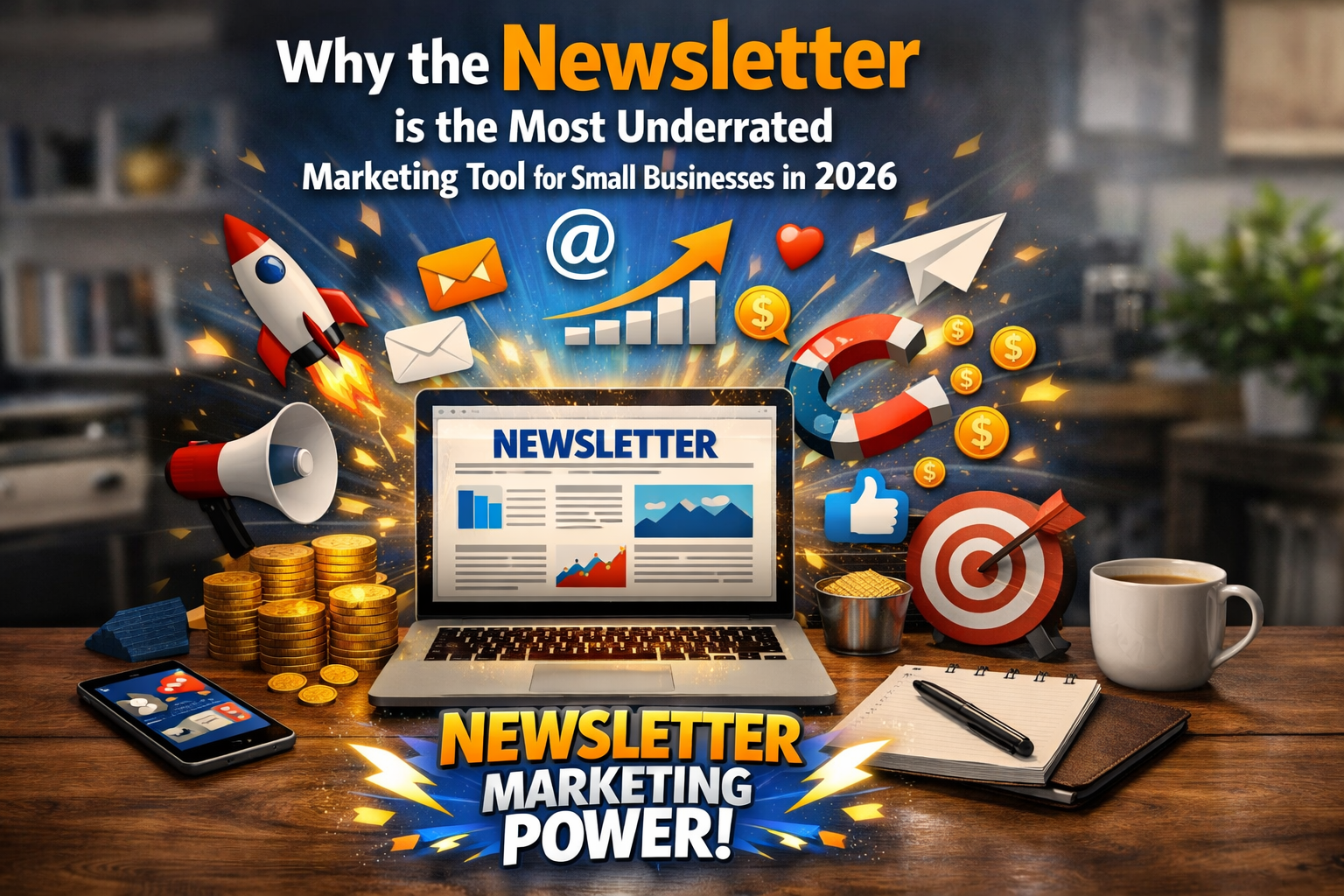
Why the Newsletter is the Most Underrated Marketing Tool a Small Business Has in 2026
By John R Ramos June 12, 2026
Some kinds of email marketing are dying. The newsletter is not one of them. Here's why it's the most underrated tool small businesses have in 2026.
Small business owner reviewing email deliverability metrics on a laptop in Orlando, Florida,
By John R Ramos June 9, 2026
Gmail and Outlook quietly changed the rules in late 2025. Here's why your small business marketing emails may not be arriving — and what to do.
By John R Ramos June 8, 2026
You are sitting at your desk, looking at the monthly numbers, and the thought crosses your mind: maybe email marketing would help the business. Then you look at the budget again and shake your head. “I can't afford it right now.” I have heard those exact words from more small business owners than I can count. And after nearly 14 years working with small businesses across Orlando and Central Florida, I want to share something that might change how you think about that sentence. Almost every time someone tells me they can't afford email marketing, money is not the real reason. That is not a sales line. It is something I have watched play out over and over. The math, when you look at it honestly, almost always says they can afford it. What is actually going on underneath the surface is usually something completely different. And until we name that, the conversation about email marketing for small businesses never goes anywhere useful. So let us look at it together honestly.
By John R Ramos June 2, 2026
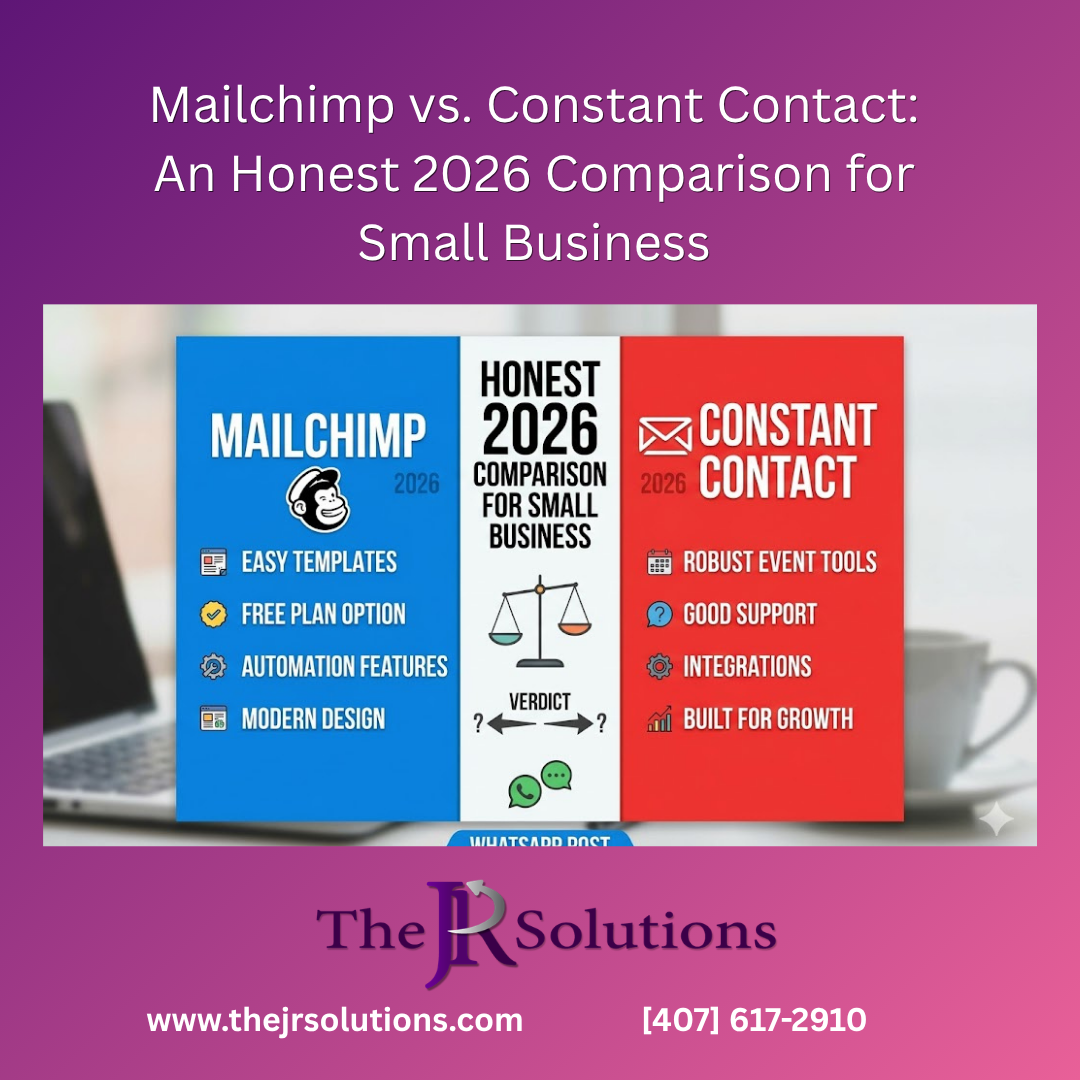
You are trying to choose an email marketing platform, and you keep landing on the same two names: Mailchimp and Constant Contact. Both are huge. Both have been around forever. Both have armies of fans online. And every comparison article you read seems to be quietly trying to sell you one of them. So let me do something different here — starting with the most important disclosure I can make. Full Disclosure Before You Read Another Word I am a Certified Constant Contact Business Partner . That is not a marketing label — it is a designation that requires me to pass a 50-question recertification exam every year on the platform’s latest features and updates, including any new tools they add. If I do not pass, I lose certain privileges. So yes, I have a professional relationship with Constant Contact, and yes, that relationship is earned and renewed annually, not free. I also have not personally used Mailchimp. What I know about Mailchimp comes from people who use it, from clients who have shared their experiences, and from Mailchimp’s own publicly published pricing pages and feature lists. I am telling you this up front because most comparison articles fake firsthand experience with both products. I would rather you know exactly where I sit and exactly what kind of source I am, so you can weigh everything that follows accordingly. Now, let us get into it. The Honest Headline: Both Platforms Are Real, and One of Them Has Been Quietly Changing Let me give you the fair version up front. Mailchimp is a real platform with real strengths. It is well-known, the interface is polished, the brand is famous, and at the very entry level, it is competitive on sticker price. Constant Contact is also a real platform with real strengths. It has been around since 1995, it focuses heavily on small business users, and the support model is genuinely different from most of the industry. Either one can work. The honest question is not “which one is better.” It is “which one is built for the kind of small business owner you actually are, in 2026?” To answer that, you have to look past the homepages and at what is actually happening with each platform. Where Mailchimp Has Been Headed (And Why It Matters) There is a story in Mailchimp’s pricing history that most comparison articles will not tell you, but it is the most important context I can give you. In 2021, Mailchimp was acquired by Intuit — the company behind QuickBooks and TurboTax — for $12 billion. Since that acquisition, here is what has happened publicly to Mailchimp’s pricing and free tier, by year: • In 2022, the free plan allowed up to 2,000 contacts. • By 2023, the free plan was reduced to 500 contacts. • As of 2026, the free plan caps at 250 contacts and 500 sends per month. • Paid plan prices have increased roughly 20–30% between 2022 and 2024. • Legacy account holders received an additional 11–13% increase in April 2026. That is an 87.5% reduction in the free plan in four years, plus paid increases on top. None of that is opinion — it is documented in Mailchimp’s own published pricing changes over time. The takeaway is not “Mailchimp is bad.” The takeaway is that Mailchimp’s business has been steadily moving upmarket since 2021 . They are increasingly built for larger enterprise customers, and the small business owner — you — is no longer the audience they are optimizing for. That is a fair observation about a company’s direction. And it is worth knowing before you sign up for a platform you plan to grow with. Sticker Price vs. Real Price: The Honest Money Comparison Here is where comparison articles usually get sneaky. They compare the lowest possible price of one platform to a higher tier of the other, and pretend that is apples to apples. Let me give it to you straight. At the entry level (500 contacts), the two are nearly identical on sticker price: • Mailchimp Essentials: about $13 per month • Constant Contact Lite: about $12 per month A dollar a month apart. Anyone telling you Constant Contact is wildly cheaper at this tier is not being straight with you. They are essentially the same starting price. The real difference shows up when you ask: “What am I actually getting for that dollar?” This is where the platforms diverge in ways that matter — and where the sticker price stops being the real price. Support: The Difference People Underestimate Until They Need It If there is one area where these two platforms are not even close, it is here. And this is the part where, from talking to Mailchimp users over the years, I have seen the most genuine frustration. Mailchimp: email support, often slow Mailchimp’s lower tiers do not include live phone support. When something goes wrong — your email did not send, your list will not import, your automation is misfiring, the deadline is today — your option is to email their support team and wait. People I know who use Mailchimp have told me that wait times can run up to three days before they hear back. Mailchimp does offer 24/7 chat and email support on paid plans, and faster priority support on the highest tier. But phone-based human assistance is not part of the standard small-business experience. The pattern I have heard from Mailchimp users, almost universally, is this: they have learned to find workarounds for problems rather than getting them solved. That is a real skill. It is also a tax — a hidden one paid in your time, your stress, and your missed deadlines. Constant Contact: free live phone support, six days a week Constant Contact includes free phone support six days a week on every paid plan. You can call as many times as you need, at no extra charge. A real human picks up, listens to your problem, and helps you fix it. That is genuinely unusual in this industry. Most platforms have offloaded customer support to chatbots and articles. Constant Contact has kept the phones open. And one more thing about support, if you go this route: as a Certified Constant Contact Business Partner, you can also call me for free. As many times as you need. No retainer, no clock running. That is just what I do. If you are a small business owner who handles a hundred things at once, the difference between “wait three days for an email reply” and “dial a number and get a person” is not a small detail. It is the difference between marketing that runs and marketing that stalls. Three Hidden Cost Patterns to Watch For Beyond sticker price, here are three ways the real bill can be higher than the marketing page suggests — things every small business owner deserves to know before committing. 1. You may pay for contacts who do not want your emails On Mailchimp, your bill is based on your total contact count — which includes unsubscribed contacts still sitting in your account. In other words, you can pay every month for people who have already told you they do not want to hear from you. That has caught many small business owners off guard, and according to independent pricing analyses, this single quirk can inflate actual bills by 20–40% above what the pricing page advertises. Constant Contact handles this differently. When a contact unsubscribes, the platform actively recommends removing them from your list so you stop paying for them. It is also one of the first things I tell my clients to do, because there is a bigger reason beyond billing: keeping unsubscribers on your list quietly hurts your deliverability. Email providers like Gmail and Outlook watch how recipients engage with your mail. A clean, engaged list lands in inboxes. A bloated list with disengaged contacts gets pushed to spam. So, removing unsubscribes saves you money and helps your future emails actually reach the people who want them. That is the kind of small detail you only learn from someone who works inside the platform every day. 2. The free plan is more limited than it looks Mailchimp’s free plan caps at 250 contacts and 500 monthly sends, with Mailchimp branding on every email and no multi-step automation. For a real small business trying to actually grow, that is more of a sampler than a usable plan. It is fine to learn on. It is not a place to run a business from. Constant Contact does not offer a forever-free plan. What it offers instead is a 30-day free trial with no credit card required , where you can load up to 100 contacts and test all of the features at full strength. Different model: trial then commit, versus stay-free-but-stuck-small. Which is better depends on what you actually want. 3. Add-on features stack up Both platforms charge extra for some features (text message marketing, advanced previews, transactional emails). That is normal. But before you commit to either, read the fine print and ask yourself which add-ons you will actually need so the comparison is honest. A Quick Side-by-Side, the Honest Way Pricing at 500 contacts: • Mailchimp Essentials: about $13/month • Constant Contact Lite: about $12/month — nearly identical Free option: • Mailchimp: forever-free at 250 contacts with branding and limited features • Constant Contact: 30-day free trial with full features, no credit card required, up to 100 contacts Phone support: • Mailchimp: not standard — email and chat, with potential multi-day waits • Constant Contact: free phone support six days a week on every paid plan Email send limits: • Mailchimp: tied to contact tier • Constant Contact: no daily send cap (though just because you can send daily does not mean you should — your subscribers will tire of it fast) Contact billing on unsubscribers: • Mailchimp: bills you based on total contacts, including unsubscribers still in your account • Constant Contact: actively recommends removing unsubscribed contacts, so you do not pay for people who no longer want your emails — and your deliverability improves as a bonus Direction of the business: • Mailchimp: moving upmarket since the 2021 Intuit acquisition • Constant Contact: still small-business-focused since 1995 So Which One Is Right for You? Here is the honest answer, the kind I would give a friend over coffee: Mailchimp might be fine for you if… • You are comfortable with technology and prefer figuring things out on your own. • You are okay waiting on email-based support when something breaks. • You have a tiny contact list and just want to play with the basics for free. • You do not mind paying for unsubscribed contacts as your list grows. Constant Contact is probably better for you if… • You want to call a real human when you have a question — and you do not want to pay extra for that privilege. • You value time saved more than $1 a month saved. • You want a platform that has stayed focused on small businesses since 1995. • You like the idea of being able to call your Certified Business Partner directly when you are stuck. Most of the small business owners I work with in Central Florida fit the second list. If you are honest with yourself about how much time you actually have to troubleshoot a platform versus how much you want to spend running your business, you probably fit the second list, too. So, Where Does This Leave You? Here is the honest pattern I have seen over and over with the small business owners I talk to in Central Florida. The decision is rarely really about Mailchimp versus Constant Contact. It is about a deeper question: Do you have the time and energy to run email marketing yourself — troubleshoot a platform, write the campaigns, manage the list, learn the analytics — or would you rather have someone handle it for you while you focus on running your business? Both answers are legitimate. Here is what each one looks like . If you would rather have it handled for you This is what most small business owners I work with ultimately choose, once they do the honest math on what their time is worth. When you work with me, you get a Certified Constant Contact Business Partner running your email marketing end-to-end. That means strategy, writing, design, scheduling, list management, troubleshooting — all of it — for one steady monthly fee. The platform is handled. The support questions never reach you. You focus on your business; I focus on the marketing function. I call this your external marketing department , and for most small businesses, the time you get back is worth more than the fee. Email me at john@thejrsolutions.com or call 407-617-2910 for a free 30-minute consultation. No pressure, no jargon, no pixie dust — If you would rather have it handled for you. If you want to see exactly how my services and pricing work, the honest pricing guide breaks it all down . And if you are still weighing whether to hire an agency, a consultant, or do it yourself, this honest comparison may help you decide . If you would rather run it yourself Some small business owners have the time and the interest to handle their own email marketing. If that is you, do not let anyone talk you out of it. The DIY path can work, especially if you start with the right platform and use the support it offers. You can start your 30-day free Constant Contact trial here — no credit card required, up to 100 contacts, full features. As a Certified Constant Contact Business Partner, I earn a commission if you sign up through that link, which is the disclosure I made at the top of this article. Whether or not you ever hire me, you can call me for free if you get stuck along the way. That offer is open to anyone who signs up through that link. The worst move is staying stuck because you cannot decide. Either path — hiring help or starting yourself — beats doing nothing. The trick is starting.
By John R Ramos May 29, 2026
You walked out of that pitch meeting feeling two things at the same time: impressed and uneasy. The agency had a polished website, a slick deck, a team of people with titles, and a monthly number that made your stomach drop a little. They threw around words like “omnichannel,” “funnel optimization,” and “brand ecosystem.” You nodded. You did not want to look uninformed. But on the drive home, the quiet voice in the back of your head asked the only question that really matters: What exactly am I paying for? That is the right question. And almost nobody in this industry will answer it honestly, because the honest answer costs them business.  So let us do it here. No pixie dust, no jargon, no pretending. After nearly 14 years working with small businesses in Central Florida, I am going to walk you through what an agency actually delivers, what an independent consultant actually delivers, where each one is genuinely worth the money, and how to spot the difference between a real expert and someone selling you fancy words.
By John R Ramos May 22, 2026
Let me guess. You know email marketing could help your business, but every time you start looking into it, you hit the same wall: nobody will give you a straight answer on what it actually costs. One site says it is “affordable.” Another says, “It depends.” A third wants your email address before they will tell you anything. Meanwhile, you are a busy small-business owner in Orlando, just trying to figure out whether this fits your budget. So let me do something different here. I am going to give you real numbers. No runaround. No “contact us for a quote” wall. Just an honest breakdown of what email marketing costs in 2026, whether you do it yourself or hire someone to do it for you — so you can make a smart decision for your business.
By John R Ramos April 27, 2026
Running a business today is not easy. Between serving customers, managing operations, keeping up with technology, staying active online, and trying to stand out in a crowded market, most small business owners are carrying more than they should. And the truth is, your competition may already have helped. Some of them may have an internal marketing team. Others may be working with a digital marketing partner who helps them stay visible, communicate consistently, and keep their brand in front of the right people. That does not mean they are better than you. It may simply mean they are not trying to do everything alone. For many small and medium-sized businesses, marketing becomes one of those things that gets pushed to the side. Not because it is unimportant, but because there are only so many hours in the day. You know you need to post on social media. You know your website should stay fresh. You know email marketing can help you stay connected. You know content matters. You know follow-up matters. But knowing what needs to be done and having the time, skill, and consistency to do it are two very different things. That is where having a digital partner can make a real difference. A good digital partner is not just someone who “does marketing.” A good digital partner helps you think through your message, your audience, your communication strategy, and the systems that keep your business visible. Think of it this way. Trying to grow your business online without direction is like sailing across the ocean without a compass, a map, or a clear destination. You may still move, but you may not be moving in the right direction. A digital partner helps you navigate. They help you clarify your message, create useful content, communicate with your audience, and stay consistent in a business environment that keeps changing.
By John R Ramos March 19, 2026
Let’s be real for a minute. The hustle on social media is exhausting. We all do it. We spend time crafting the perfect post for Facebook, we find the right sounds for a Reel on Instagram, and we jump into groups, trying to show up, be useful, and get seen. And when we get a post that takes off, when the "likes" and comments start rolling in, it feels good. It feels like progress. But I have a hard question for you (and it’s one I had to ask myself not too long ago): If your favorite social media platform disappeared tomorrow, how would you reach those people again? 😰 If your answer is a long silence or a spike in anxiety, you aren’t alone. But it means you are building your business on "rented land."
By John R Ramos October 27, 2025
IYou’ve likely seen them: bold visuals, stacked icons, concise text, telling a story at a glance. That’s an “infographic “—but in 2025, it’s more than just a pretty picture. For small-to-medium-sized businesses ready to stand out in a noisy marketplace, infographics remain a potent tool—if used strategically.
By John R. Ramos June 30, 2025
How Email Marketing Works - 2025