
Let me break down how we guide our clients through trust-first email strategies at *The JR Solutions* — the same steps you can start using today.
Building Brand Trust with Email Marketing (Why It Still Works in 2025)
John R Ramos • May 28, 2025
If you’re running a business in 2025, you’ve probably noticed just how noisy the online world has become. We’re all getting hit with ads, pop-ups, and social media posts every time we pick up our phones.
But here’s the thing: **people don’t want more noise. They want a connection. **
And that’s precisely why **email marketing is still one of the most powerful tools you can use to build absolute trust with your audience. **
Whether you’re just starting out or already have a list of subscribers, this guide will walk you through how to use email not just to sell, but to connect — and how *The JR Solutions* can support you every step of the way.

Why Trust Matters (More Than Ever)
We all know that people don’t buy from businesses — they buy from people they trust.
These days, consumers are smarter. They’re doing their research, reading reviews, and tuning out anything that feels too “salesy.” So, how do you stand out?
Simple: You build trust first.
And email marketing lets you do that in a way few other platforms can. You’re not battling an algorithm. You’re landing directly in someone’s inbox — with permission.
What Makes Email So Effective?
.Here’s why we always recommend email marketing to our clients at *The JR Solutions*:
✅ It feels personal
You can write as if you're talking to one person — and with segmentation, you kind of are.
✅ People opt in (they *want* to hear from you)
That’s already a huge win. You’re not interrupting them — they’re inviting you in.
✅ It builds consistency
.
When you show up regularly in someone’s inbox with helpful, valuable content, your brand becomes familiar. And familiar = trusted.
.

When you show up regularly in someone’s inbox with helpful, valuable content, your brand becomes familiar.
And familiar = trusted.
5 Ways to Build Brand Trust Through Email

1. **Kick Things Off with a Real Welcome**
You only get one chance to make a first impression.
.ad of sending a boring “Thanks for signing up” email, create a short welcome series that introduces:
* Who you are
* What your business stands for
* What they can expect from you
* A quick win — a tip, freebie, or tool they’ll appreciate
📬 *Pro tip:* Use your name, your voice, and even your photo. Let people see the human behind the brand.
We help our clients craft welcome sequences that *feel real*, not robotic.
2. **Focus on Value Over Sales**
If every email you send is about a product or promo, people will stop opening them.
Instead, share content that helps or inspires:
* Quick tips
* Helpful resources
* Lessons you’ve learned
* Answers to common questions
* Behind-the-scenes stories
It doesn’t have to be long. Just be helpful and consistent.
Need ideas? *The JR Solutions* helps small businesses build content plans that keep people engaged — and clicking.
3. **Keep It Visually Consistent**
Your emails should reflect your personality. That means:
* Your colors
* Your logo
* Your tone of voice
When your emails feel cohesive with your website and social media, it builds recognition. People start to remember you — and that’s a big part of trust.
If design isn’t your thing, *The JR Solutions* can build templates that make your emails look clean and professional every time.
4. **Tell Your Story**
This is a big one. We all connect through stories — not sales pitches.
Tell people:
* Why you started your business
* What drives you
* How your product helped someone
* What you’ve learned along the way
Even something small — like a behind-the-scenes peek at your day — helps people feel connected to you.
Want help shaping your story? We do that all the time at *The JR Solutions*. We’ll make sure your voice comes through loud and clear.
5. **Make It a Two-Way Street**
Your emails shouldn’t just talk to *at* people — they should invite responses. Ask questions. Invite feedback. Add polls or links that help you learn about your audience.
And don’t forget to track what’s working:
* Are people opening your emails?
* Are they clicking?
* Are they unsubscribing?
We help our clients not just write emails but also understand the numbers. Because numbers tell a story, too.
Want to Try Email Marketing Yourself?
If you’re looking for an easy-to-use tool to get started, I always recommend
[**Constant Contact**] https://conta.cc/2IZyiPG/.
It’s super beginner-friendly and gives you everything you need to:
* Build your list
* Send beautiful emails
* Track what’s working
Click here to try Constant Contact free for 30 days https://conta.cc/2IZyiPG** — no strings attached.
Need help setting it up? *The JR Solutions* can walk you through everything — from setting up your account to writing your first welcome series.
Final Thoughts
In today’s crowded digital world, email is more than just a marketing tool — it’s a way to **build real, lasting relationships**.
So be yourself. Be helpful. Show up consistently. And always lead with trust.
And if you want someone in your corner to help you get it right?
👉 [Let’s talk at The JR Solutions](https://www.thejrsolutions.com)
We’ll help you take your email marketing from “just okay” to “wow, that really sounds like me.”
POST WRITTEN BY
John R. Ramos
The JR Solutions Blog

A few years ago, I spent money on software that promised to help me write better marketing copies. I wanted to develop my copywriting skills professionally. The offer sounded practical: use this software to organize my thoughts and put together a more effective message. I bought it. I followed the instructions. I gave it a try. The content attracted little readership, and I didn’t see enough value to justify what I had spent. Looking at the finished work, I felt I could have written something comparable myself. Then the next offer arrived. This version would help me create more targeted messages, with better hooks and more persuasive words. A few days later, another offer followed. The upgrades were optional. But each message gave me another reason to question whether what I had already purchased was enough.
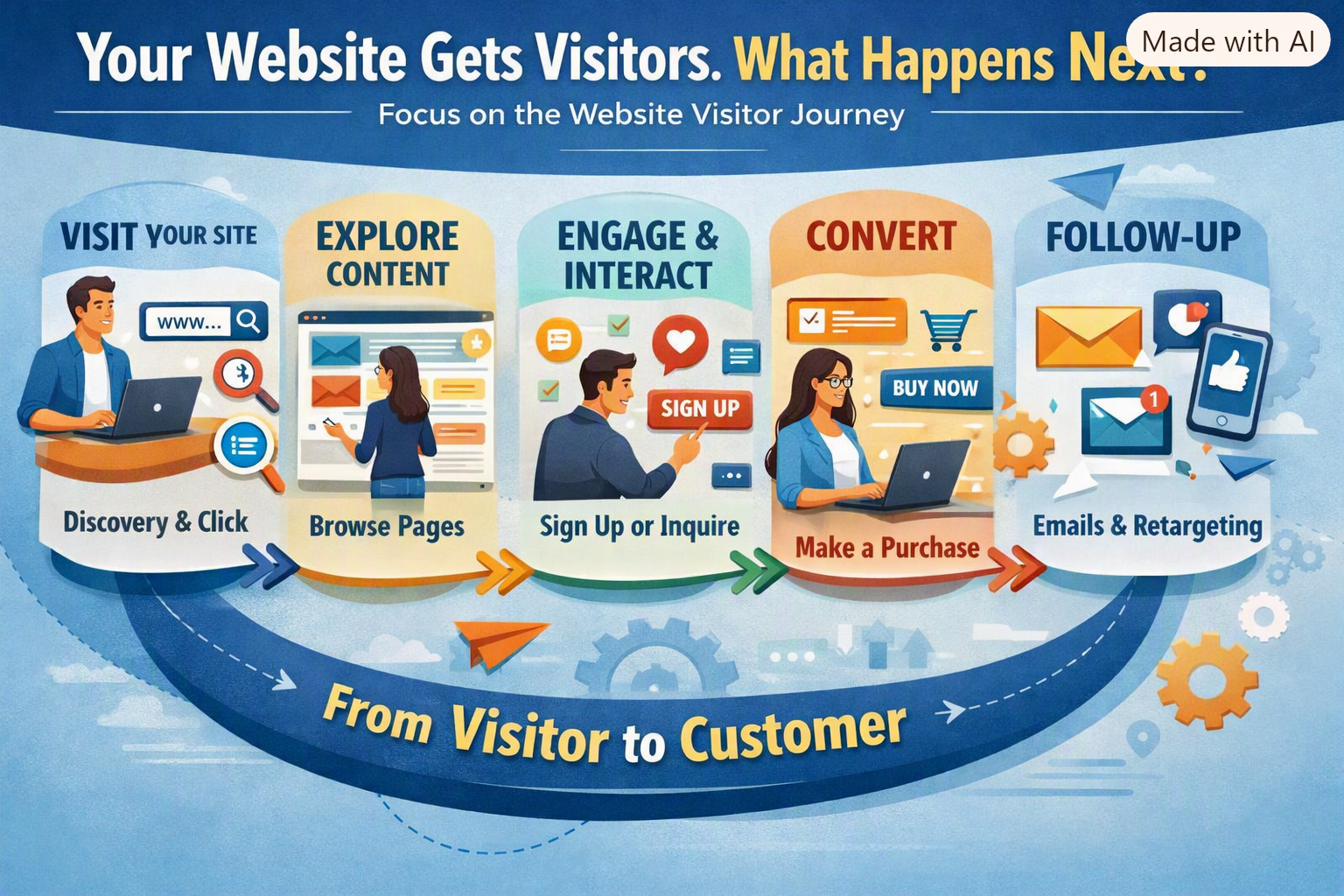
When I visit a prospect’s website, I’m trying to understand the business before we talk. What do they offer? Who do they serve? What would make someone choose them? Sometimes, the website leaves me with more questions than answers. I can find the business name and a few general statements, but I have to hunt for the information that would help me take the next step. As a business owner, you already know your services. You understand your process. You know what makes your work worth paying for. Someone visiting for the first time needs help seeing those things. Look at your website through a customer’s eyes Let’s use a hypothetical neighborhood gym. A person living nearby wants to start exercising again. They haven’t belonged to a gym in years, and they’re a little uncomfortable about walking into one. They find the gym’s website. There are photos of equipment and people lifting heavy weights. The headline says, “Reach Your Full Potential.” That sounds encouraging, but they still have questions. Are beginners welcome? Does someone explain how to use the equipment? Are there classes that fit around a work schedule? Can they visit before joining? If the website leaves those questions unanswered, making contact becomes another task they might put off. Give people something they can use For our hypothetical gym, a current class schedule would help. So would an introduction to the trainers and a short explanation of what happens during a first visit. Photos of the actual facility could help someone picture themselves there. Clear information about membership options could help them decide whether to inquire. Think about the questions people ask when they call your business. Those conversations can tell you what belongs on your website. You don’t have to answer everything. Give visitors enough information to feel comfortable continuing the conversation. Make the next step clear Suppose the gym’s main invitation is “Subscribe to our newsletter.” You know I believe in newsletters. Email marketing has been a large part of my work for 14 years. But someone considering a gym membership may first want to see the facility or speak with a trainer. “Schedule a tour” gives that person a useful next step. Explain what happens, too. How long does the tour take? Will someone answer questions about membership? Does the visitor need to bring anything? A clear invitation becomes more helpful when people know what to expect. Give interested visitors a reason to stay connected Some people will visit the gym’s website before they’re ready to join. Perhaps they’re comparing options or waiting for their schedule to settle down. Email can help maintain that connection, with their permission. Instead of simply asking them to subscribe, explain what they’ll receive. For this gym, that could mean beginner workout advice, class updates, and introductions to the trainers. Then deliver what you promised. Useful, consistent emails give people opportunities to get to know the business before making a decision. Decide what deserves attention first You may be reading this and wondering whether your website needs a complete redesign. That takes a closer look. An older design or a single-page format alone doesn’t tell us enough. Start with the information and actions your customers need. Check whether those are easy to find and use, especially on a phone. If your budget is limited, ask for a proposal that explains priorities. What can be improved within the existing site? What requires more work? What is each change intended to accomplish? You should understand what you’re paying for. Try this today: open your website and imagine you’re considering your business for the first time. Find a service. Look for answers to a few basic questions. Try to make an inquiry. Where do you hesitate? That’s a useful place to begin. At The JR Solutions, I’m preparing to add website development through a collaboration with another agency, alongside my content writing and email marketing services. If your website no longer reflects the business, you run today, let’s talk about what needs attention. Contact me at john@thejrsolutions.com
Part 3 of 3: how three articles about my own business became one lesson. Part 1 was about a process I thought I knew by heart. Part 2 was about a process I forgot I ever built. This one is different. This one is about the process behind this very series: how I decide what to write about each week. The honest answer is that there isn't one method. Some weeks I plan ahead. I pick a topic on Monday and have it written by Wednesday. Other weeks the topic finds me. Something breaks, something surprises me, or something forces me to look closely at my own business, and that becomes the article. A few of these pieces came from weeks that were harder than they looked from the outside. Part 2 came out of a stretch where client work had slowed and I needed a reason to sit down and actually examine my own systems instead of avoiding them. Writing about a missing automation was easier than saying out loud that business had gotten quiet. Putting it on the page made it real, and making it real made it easier to face.

A 14-year email marketing consultant admits he doesn't have an automation sequence running — and explains why that's the right call for now. Part 2 of 3.
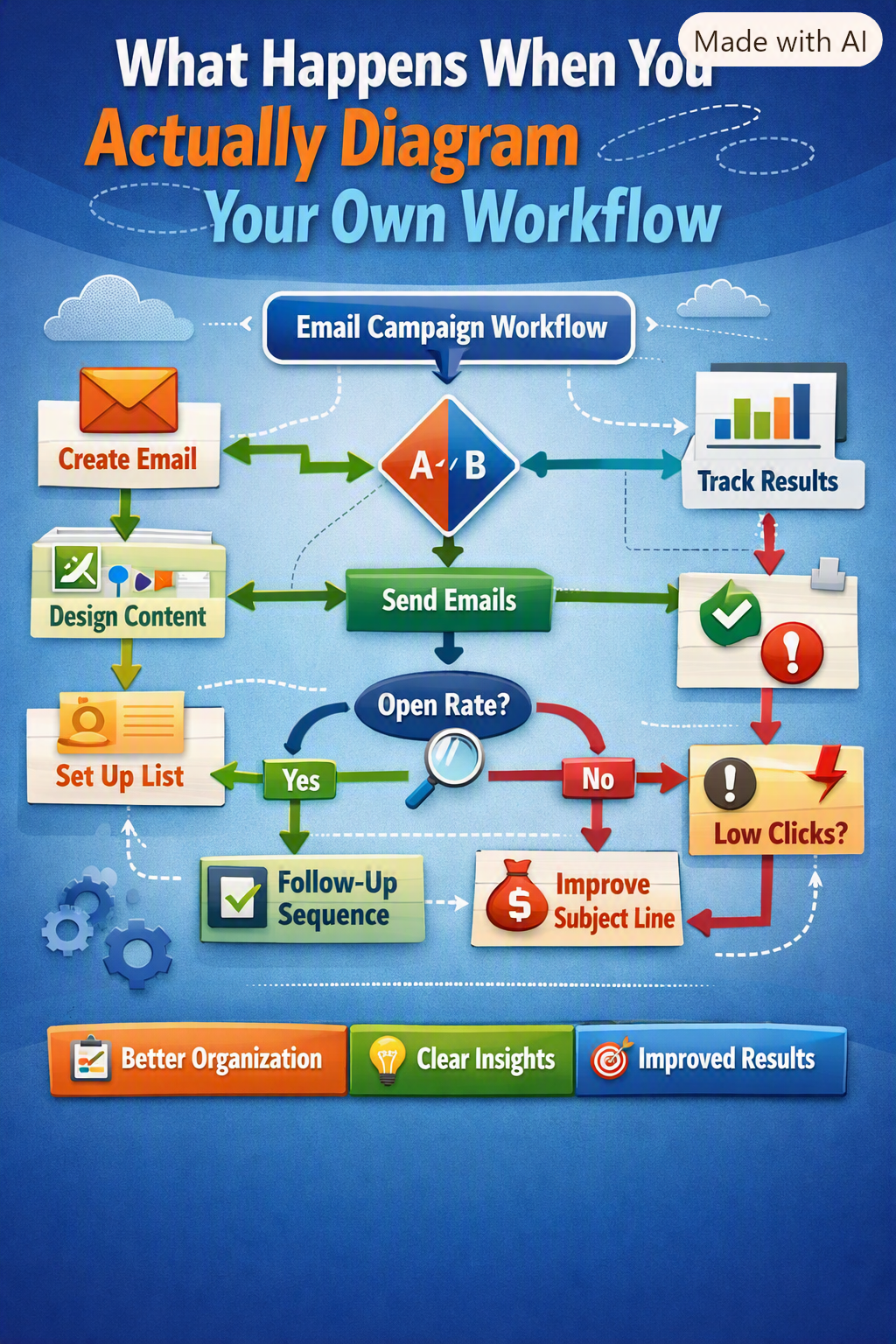
A 14-year email marketing consultant flowcharted his own campaign-building process — and found a real gap in it. Part 1 of a 3-part series.

A 14-year email marketing consultant ran a real 30-day test letting AI write client emails. Here's what worked, what broke, and what to actually do.
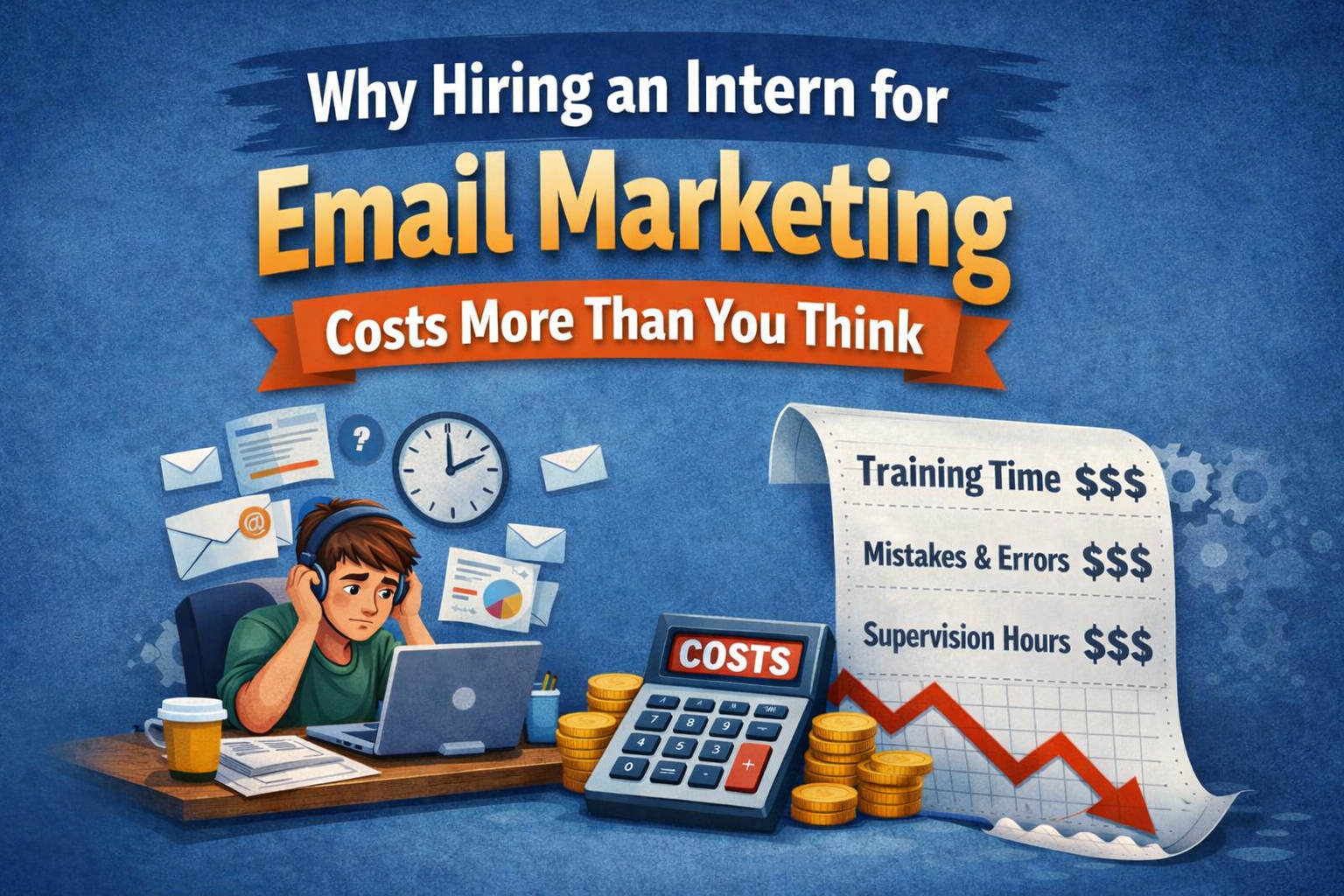
Thinking about hiring an intern to handle your email marketing? Here's the hidden cost most small business owners don't see until it's too late — from a 14-year Constant Contact partner.
Thinking about hiring an intern to handle your email marketing? Here's the hidden cost most small business owners don't see until it's too late — from a 14-year Constant Contact partner.

Gmail and Outlook quietly changed the rules in late 2025. Here's why your small business marketing emails may not be arriving — and what to do.

You are sitting at your desk, looking at the monthly numbers, and the thought crosses your mind: maybe email marketing would help the business. Then you look at the budget again and shake your head. “I can't afford it right now.” I have heard those exact words from more small business owners than I can count. And after nearly 14 years working with small businesses across Orlando and Central Florida, I want to share something that might change how you think about that sentence. Almost every time someone tells me they can't afford email marketing, money is not the real reason. That is not a sales line. It is something I have watched play out over and over. The math, when you look at it honestly, almost always says they can afford it. What is actually going on underneath the surface is usually something completely different. And until we name that, the conversation about email marketing for small businesses never goes anywhere useful. So let us look at it together honestly.